Riemann hypothesis: how do you check a proof nobody can read?
On 20 November 2026 Levent Alpöge, a mathematician at Anthropic, the company that makes the AI model Claude, posted a four-page note on his website: “I believe I have, working with Claude, discovered a proof of the Riemann Hypothesis.” He did not attach a proof that a person could read. Instead he released a library of about 17 million lines in Lean, a language in which a computer checks a proof step by step. A week on, every check run by several independent teams has passed. But nobody has read it, and nobody can explain why it works.
What Alpöge claims
Prime numbers get sparser as numbers grow, and a smooth curve estimates how many of them lie below any number x. Below one trillion there are 37,607,912,018 primes and the curve misses by only 38,263, less than the square root of a trillion, which is one million. The Riemann hypothesis says that it stays this way forever: the true count never strays from the curve by much more than about
Alpöge also claims the generalised Riemann hypothesis, a similar statement about how evenly primes are shared out, say, among numbers ending in 1, 3, 7 and 9. The checkers note, though, that the Lean files cover only one version of it (for the so-called Dirichlet L-functions), not the most general ones.
What does the computer check?
In Lean every step has to follow from earlier ones by fixed rules, and the final verdict belongs to a small program called the kernel. It knows nothing about number theory; it only checks that the rules were followed. That is the whole trick: a few thousand lines of kernel can be read by people, 17 million lines of proof cannot. So you do not have to trust the proof, only the kernel.
On 21 November the organisations behind Lean and its shared library of proved mathematics, Mathlib, wrote that they have “full confidence” that the proof is correct. Andrew Sutherland of MIT and Michael Rubinstein published their own logs. Both compiled all 175,187 files and found that the proof relies only on the three basic assumptions (axioms) that any Lean proof may use, and smuggles in nothing extra. Between them they also replayed the proof through several kernels written independently by different people.
What the computer cannot check
A computer checks that the proof proves the statement written in the file. Whether that statement really is the Riemann hypothesis, only a human can judge. A tiny example shows the danger. Imagine someone trying to state Goldbach's conjecture and, by mistake, writing:
Every even number n with n>2 and n<2 is the sum of two primes.
Lean would happily accept a proof of this, because no number is both greater and less than 2. The statement is true and says nothing.
That is why the Riemann hypothesis is stated separately in the Mathlib library, under the name RiemannHypothesis, and according to the Lean FRO it was “carefully vetted by experts in Lean and number theory”. A program then checked that Alpöge's theorem is that statement word for word. What remains to be trusted is that the kernels have no bugs (the computer scientist Scott Aaronson recalls that kernel bugs “have, in the past, allowed proofs of 0=1”), that the basic assumptions of mathematics never contradict each other and that Mathlib's definition of the zeta function means what we think. Several independent kernels were run because the same bug is unlikely to be in all of them.
Why the length is a problem
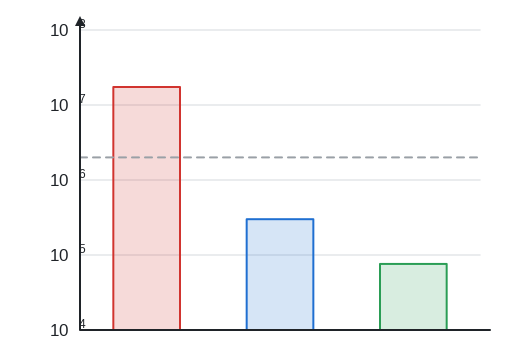
For comparison: all of Mathlib, built over years by hundreds of people, has about 2 million lines, according to Rubinstein. Alpöge's proof is more than eight times as long.
Even if every step is correct, a proof nobody understands teaches mathematicians nothing. Maksym Radziwiłł (New York University) told Quanta magazine: “The object of mathematics as the rest of science is really the question 'why?' and this doesn't answer it at all.” James Maynard, a Fields medallist, added: “If this fully checks out, it is clearly a historic milestone in mathematics.” Terence Tao, probably the best-known living mathematician, expects that “the digestion process will take some time”. Vítězslav Kala from Charles University told ČT24 on 23 November that it is now “very likely” the proof is correct, but that human mathematicians are still needed to understand the results.
Alpöge originally wrote that when he asked Claude for a human-readable proof, it produced more than 250,000 pages. The figure spread through the news as a fact, until on 24 November he said he had been joking: “I find big number extremely hilarious.” No such text exists.
Shorter versions
On 25 November Luke Sernau, who credits his colleagues at Anthropic and Claude, published a shorter version of the proof in two editions: a “readable” one (tidier for computer specialists) of about 300,000 lines and a compact one of about 76,000. The compact edition is more than two hundred times shorter than the original, the readable one almost sixty times, yet you would not read either in an evening. Sernau himself writes: “No mathematician has read it through, and no paper comes with it.” By 26 November both had passed Sutherland's checks.
The hunt for the idea behind the proof has started too: on 24 November Anurag Sahay, Will Sawin and Lior Silberman announced on Tao's blog a public collaboration aiming at “a human-readable and understandable proof” of both hypotheses.
What we know and what we don't
Independent checks agree that the Lean files compile, that their main theorem is the Mathlib statement of the Riemann hypothesis, and that several independent kernels accept the proof. If the kernels have no bugs, the basic assumptions of mathematics are consistent and Mathlib's definitions mean what we think, then the Riemann hypothesis holds. Lean's developers have “full confidence”; the mathematicians quoted above are more cautious.
It is not known why. There is no paper and no idea that a mathematician could explain on a blackboard. On the same day, 20 November, a 940-page manuscript by Alessandro Masullo appeared, claiming a human proof of the generalised Riemann hypothesis. It can be read, but problems were pointed out within hours and it is still being checked. So we have two claimed proofs, each lacking what the other offers.
This is the situation as of 26 November 2026. For full disclosure: this article was written with the help of Claude, the model made by Anthropic, where Alpöge and Sernau work.
Sources
- Levent Alpöge: Remark (PDF), 20 November 2026
- Lean FRO and Mathlib Initiative: The Riemann Hypothesis
- Andrew Sutherland: verification of the Lean proof
- Andrew Sutherland: verification of the shorter versions
- Michael Rubinstein: GRH Lean verification
- Luke Sernau: grh-lean
- Quanta Magazine: update on the Riemann hypothesis
- Nature: Mathematicians astounded by AI and human-written proofs of iconic Riemann hypothesis
- Terence Tao: Unforced Euler singularity, unforced Navier–Stokes singularity, and the generalized Riemann hypothesis
- A. Sahay, W. Sawin, L. Silberman: G.R.H. Polymath
- Scott Aaronson: Shtetl-Optimized, 20 November 2026
- ČT24: Důkaz Riemannovy hypotézy od AI je správný, věří matematik