Absolute value
The absolute value of a number is always non-negative, that is, greater than or equal to zero. If we want to find the absolute value of a positive number, it is always the same number. But if we want to find the absolute value of a negative number, the result is the opposite number (that is, for x where x < 0, the absolute value is −x). The absolute value is written with two vertical bars: |x|.
Basic properties
Although it seems that working with absolute values will be a piece of cake, the opposite is usually true, and they can make an otherwise easy function quite unpleasant. See, for example, linear equations with absolute value. Let’s look at a few more examples:
The absolute value has the following properties, for values x, a, b from the set of real numbers:
- |x| ≥ 0
- |a · b| = |a| · |b|
- |a + b| ≤ |a| + |b|
- |a| ≤ b ⇔ −b ≤ a ≤ b
The absolute value of complex numbers is calculated separately.
Graphs
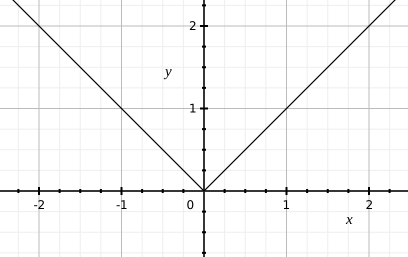
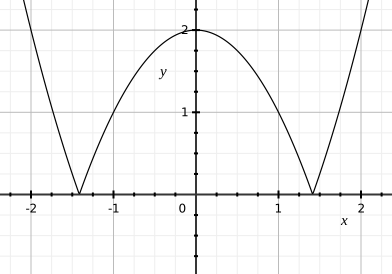
Graphs of functions with an absolute value are characterised by curves with a sharp point. At that point the function is not differentiable.